What I did on my gap year
I write this post as a way to remember a wild year (and a half) of my life and to provide a lens into the life of a young person working in startups. I sprinkled in random details to help illuminate my memories and lessons from business and collaboration to help those gapping.
Part I: Leaving high school to join YC
In the last semester of senior year, I became connected with a student at Georgia Tech who shared a lot of the same interests in robotics and custom manufacturing. We decided to do a two-week sprint: see if we could build a custom robotic arm with 5 degrees-of-freedom. He worked on designing and 3D-printing the robot, and I concentrated on programming the servo actuators. Our grand vision was to see if LLMs could really control and plan robot trajectories.The experiment almost worked! We iterated on this robot arm by allowing custom motion profiling for the servo go-to-position commands. Our actuator mounts were a little loose at first, but we tightened them up such that the trajectories were relatively precise. Importantly, we discovered that Claude could even operate the robot by sending positions to each actuator.
In February, we applied to the Spring 2025 batch with our current idea: autonomous robotics for sheet metal manufacturing, a foundational component for custom robots and drones. My co-founder visited SF one weekend in March, talked to a partner, and showed him a CAD render. One morning at a FRC robotics tournament, I woke up to see a message from my co-founder: we got an interview for YC!
We had a couple days to prepare. I left the tournament early, and we began mock interviewing with founders of YC companies. One tool that was helpful is the online YC mock interview tool. We nailed our responses to these rapid-fire questions about our sheet metal customers and our experience in robotics research and metal manufacturing. The interview went by fast (only 10 minutes), but I clearly remember how passionate and nervously excited we were to be there.
I headed back to school, but we got a call from our interviewer that the partners were unsure about our traction in revenue. He gave us a challenge: see if we could get a Letter of Intent (LOI) from a sheet metal manufacturer in the next couple of hours. My co-founders scrambled to call manufacturing owners we knew in Georgia, and we got a tentative contract from a large sheet metal distributor. As I sat in AP Physics lecture, my co-founder told me to check my email, and I read “Congratulations, we would love to have you join the YC Spring 2025 batch!” In shock, I looked up from my phone, smiled, and held onto this amazing moment.
Part II: Starting the YC Batch
As SAVA Robotics was one of the last companies accepted into the YC batch, we had less than two weeks to move to San Francisco. Along with my co-founder, I walked into my principal’s office to ask him if I could move the rest of my senior year virtual. I didn’t really think too much about whether I wanted to pre-empt the end of high school to continue this startup journey: it felt like a clear decision at the time.The FRC state championship for Georgia was my final weekend before flying to SF. My team advanced far in the playoffs and was competing in the semi-finals before I left for the airport. I exchanged a tearful goodbye with my long-time mentor and coach, along with other teammates who were queueing for the next match. I had put more focus towards startups than competition robotics, which I dove into throughout my time in high school. It was hard realizing that I would never have that joy of robotics competitions again.
Arriving in San Francisco was an exhilarating feeling. From the moment we landed in Dogpatch, we were ready to dive heads-in on building robots and finding customers. In the first month of YC, we began building a robotic sheet metal operator, SAVA 01, using custom-designed parts, 6DOF industrial arms, and high-quality depth cameras.
Through our friends at Pave Robotics, we could acquire shop space in their metal shop, located in the Mission District. This second half of YC was by far the most fun time I’ve ever had building. Every day, we hit the gym, drove to the metal shop, worked on hard but fun systems engineering problems and computer vision tasks, then paused for lunch at a Nepalese place, and continued working in the afternoon.
Before our public launch to get customer inbound, I recruited my film friend from LA to travel up to San Francisco and help us record our launch video. In less than 48 hours, we visited a couple sheet metal manufacturers and interviewed them about labor shortages and challenges with outdated automation. After two interviews and a burrito in Santa Clara, my friend and I felt that we didn’t have good interview content. With no hesitation, he drove us around a manufacturing area in South Bay, rolled down his window, and asked people if they worked in sheet metal manufacturing. In fact, some of them did! We got one street-side interview, crashed an employee cookout and used our best Spanish to get a tour of the shop, and went door-to-door to shops in the area.
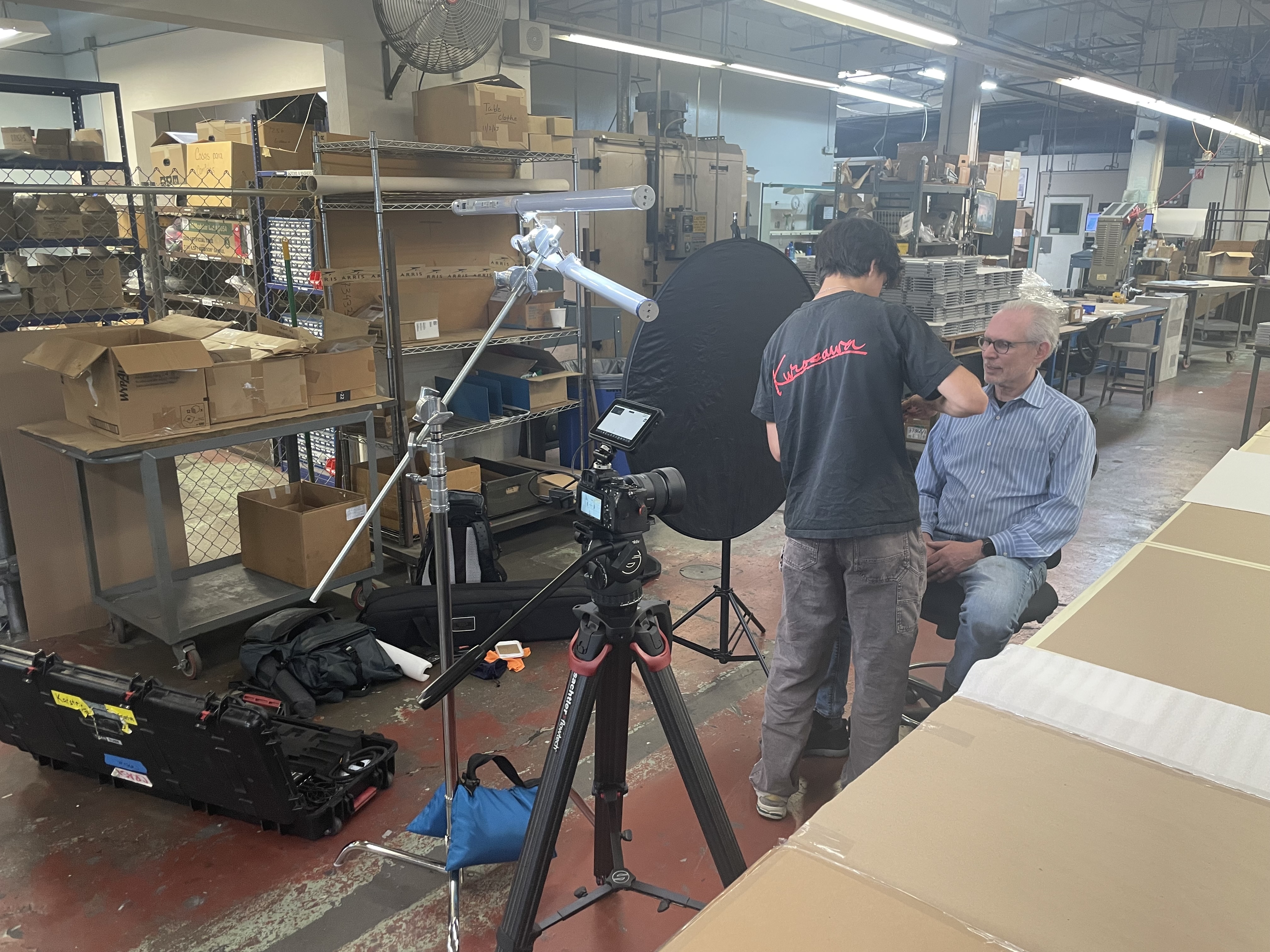
There were a couple almost all-nighters during YC: one time was finishing the perception demo for our batch, and another time was filming the launch video in our metal shop. On our street in the mission district, the shop was across from a park, but down the alley was a sketchy industrial space. Our building owners probably also suspected there was suspicious activity down there, so they installed a camera-activated alarm system in front of the metal shop. Following late nights in the shop, we had to duck and sprint to the car to not activate the motion system. One night, we tripped the alarm twice, and we started hearing cop sirens while working on our robot’s code!
After we released our launch video and developed our front-end part portal, hard tech startups from YC began reaching out for custom manufacturing. Our value prop? We could turn around parts, from manufacturing to delivery, within 24 hours! On our first job, we managed to get the material in time but failed to manufacture the part precisely and on time. We still decided to deliver the part late, and once the engineer closely inspected the part, well, he screamed at us! I learned that some engineers are very passionate about what they do.
Part III: Getting Removed from the Startup
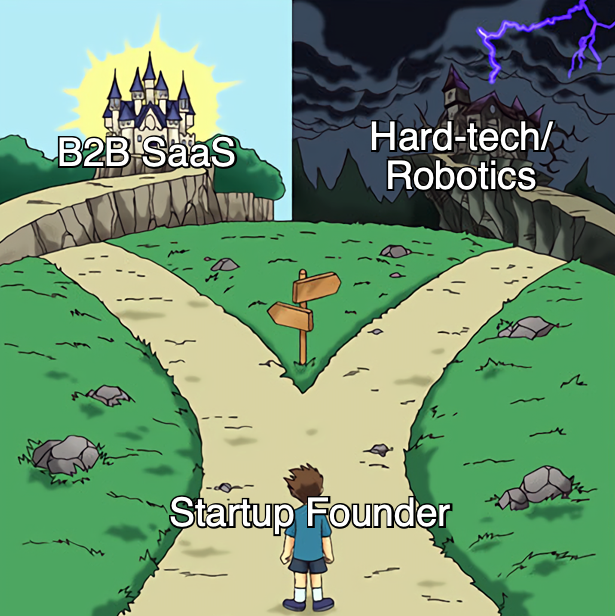
YC Demo Day and raise week had finally arrived. My co-founder took countless calls with investors, and I joined a call with an Italian venture fund. Just like our YC interview, we passionately talked about our progress from the last months and our ambitions to build a bigger, autonomous sheet metal factory. This call secured us our first check, which removed the activation energy for later investors to follow on.By the end of the two weeks for raising, our team had been through a rollercoaster of emotions. I could sense a growing tension between my co-founders and I, but I kept showing up to the metal factory and working on the robot. Suddenly, I woke up one morning to my co-founders awaiting me in the living room. A pit grew in my stomach: I could sense what was coming. They sat me down and told me, “You don’t align with the next stage of the company.” I was heartbroken at this news: they voted me out via a majority decision. In startups, you must imagine yourselves working on a problem for 10-years, but I had to abruptly forget the next 10 years.
I walked down to the YC office and met with our YC partner. He gave me some advice that was hard to stomach but maybe helpful in retrospect: “Go to school, find friends, and build projects.” I didn’t really like his advice at first: after all, I was planning to spend a long-time working on robotics for manufacturing! Early-stage startups are a tricky world, and I know many other young people who faced similar situations.
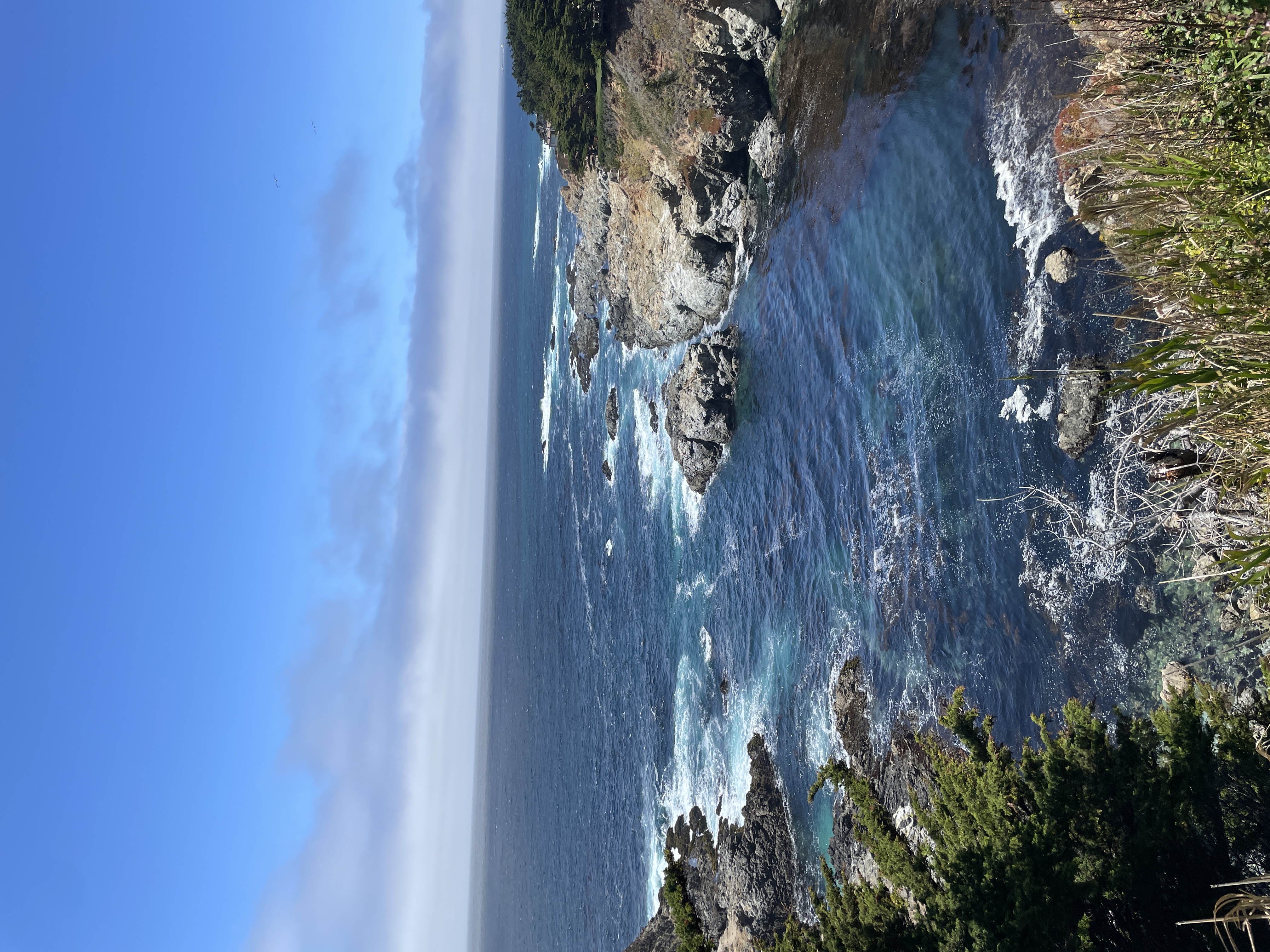
Thankfully, I had made some young friends in YC, who helped me move out of my co-founder’s apartment and gave me a place to stay. I bounced around from blow-up bed to blow-up bed, trying to navigate the legal separation with the startup. These situations are gray and highly emotional, but I didn’t go home because I wanted to be in-person to negotiate. My mom came out to visit me, and we traveled around the California coast while I thought over things.
Part IV: Sailing, Arcadia, and Berkeley
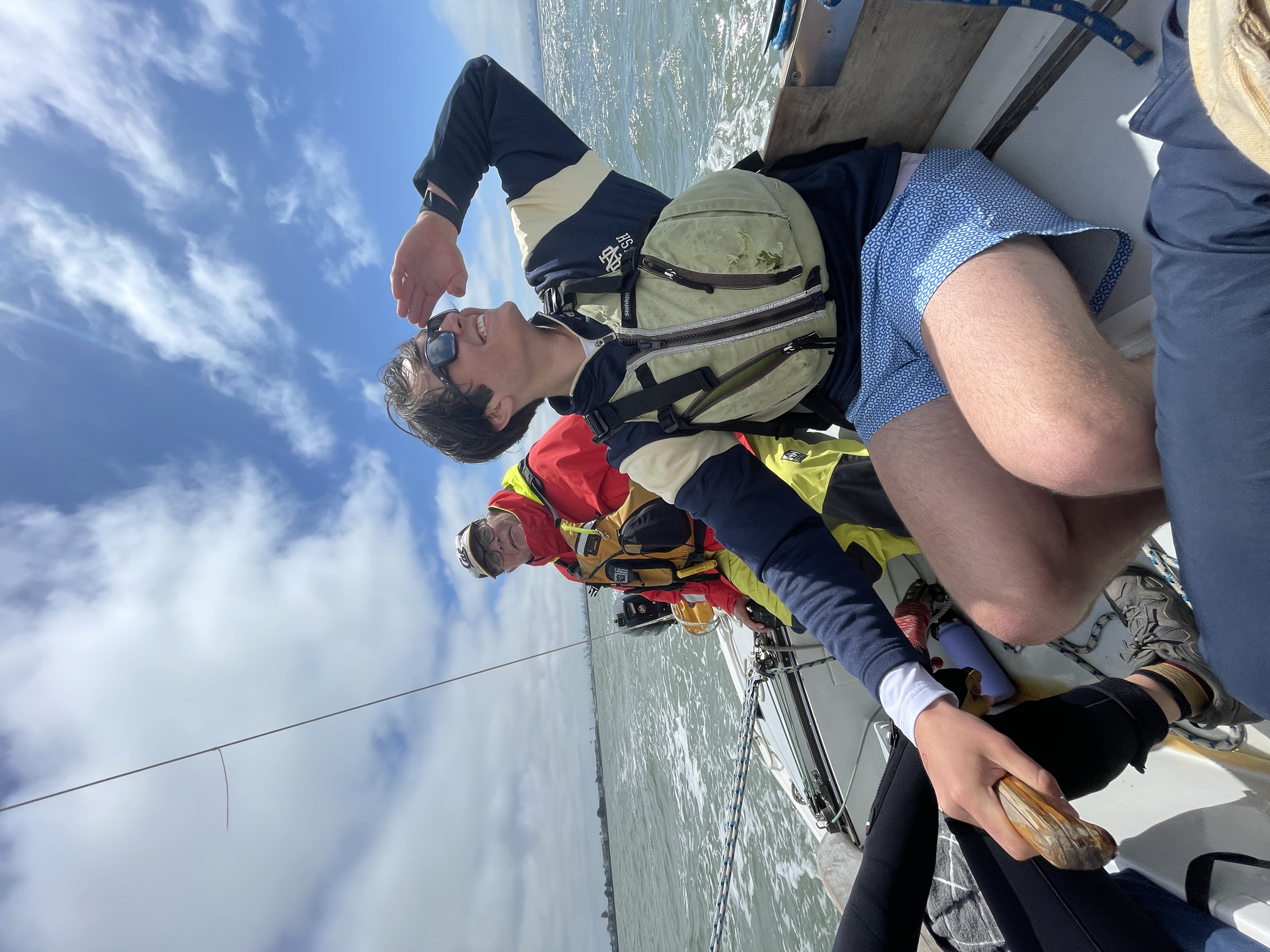
I heard about a volunteer-run sailing club in Berkeley, CA and decided to visit for open house. In the summers past, I learned how to sail small dinghies and larger boats even without using a rudder. On my first visit, I met an old sailor named David. He was a professor of Asian Studies at UC Berkeley, and through him I got to speak Italian and be introduced to the sailing community. Membership at the club is convenient: for around $100 a month, you get access to free lessons, windsurfing, and the ability to take out dinghies on your own!Still overlapping with my time at Vassar, I would wake up early on Saturdays, which was assisted by the sound of jackhammers outside my window at 7am. The BART goes directly to Berkeley, and from there I could bike down to the Marina. On the sailboat, you have an amazing view of the San Francisco skyline, Golden Gate bridge, and Alcatraz. Even better are the sailing instructors like David, who educate you on the physics of sailing and drop life lessons here and there. My favorite? Even a broken boat can sail downwind, so keep moving forward.
Originally, I was prepared to present about some world model research my friend and I were working on. Instead, I sped through the presentation and just started sharing my story out loud: the co-founder breakup, working at Vassar, and now being out of a job once again. I was surprised to get a flurry of questions, none of which were about world models, but rather about my story. I went home on the BART that night, feeling like I had found yet another community in Berkeley.
After my old boss’s apartment lease ended, I flew home, won third place at HackGT 12, and prepared to move into Arcadia’s guest room. Before my role at Vassar ended, I decided to take a gap year from Carnegie Mellon, where I had been accepted into over the spring. Now, Arcadia gave me a feeling of the college experience. I was surrounded by researchers and scientists in a 14-bedroom house closer to UC Berkeley than most on-campus housing.
In Arcadia, my learning flourished. I crashed classes across physics, operating systems, and human-computer interaction. My friends served as helpful first-users for a side project of mine, which makes it easier to manage cloud GPUs. We crashed hackathons, learning about RDMA at GPU Mode and energy-based models at Extropic. For a couple months, I did contracting work for startups building computer use agents and post-training infra.
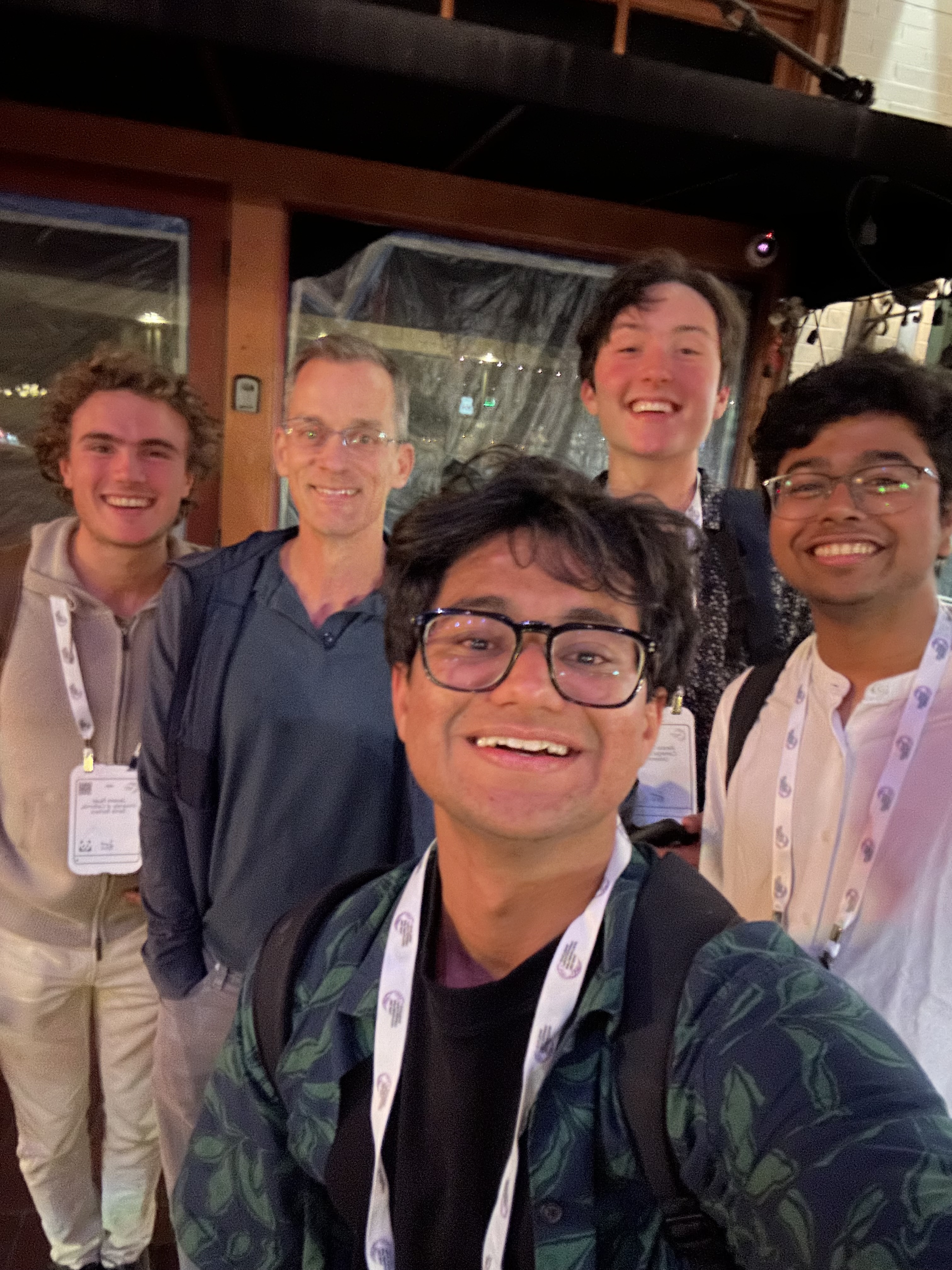
Inspired by my house mates, I began reading AI papers, specifically in systems research. Once, I reached out to a PhD student at Sky Lab about extending his recent paper. We white-boarded about my idea, and he thought it would be a nice performance improvement! At the same time, my Arcadia friends were presenting at the NeurIPS mechanistic interpretability workshop in San Diego, so I decided to tag along. I loved reading all the conference posters, chatting with ML systems people, and working on the open-source library from my chat at Sky.
It was November in New York. I crashed on a friend’s couch at NYU, walked across the Brooklyn bridge, and did my contracting work on the Great Lawn in Central Park. Through Vassar, I had become connected and interviewed with Physical Intelligence in SF. The co-founder of PI and I had a good conversation on robotics and reinforcement learning. Since I was interested in GPU infrastructure and Kubernetes, I asked if they had any post-training infrastructure I could work on. He said, “it’s all managed by Modal.” A little upset, I still reached out to him in New York to see if I could get connected with Modal. An engineer reached out to meet me for coffee.
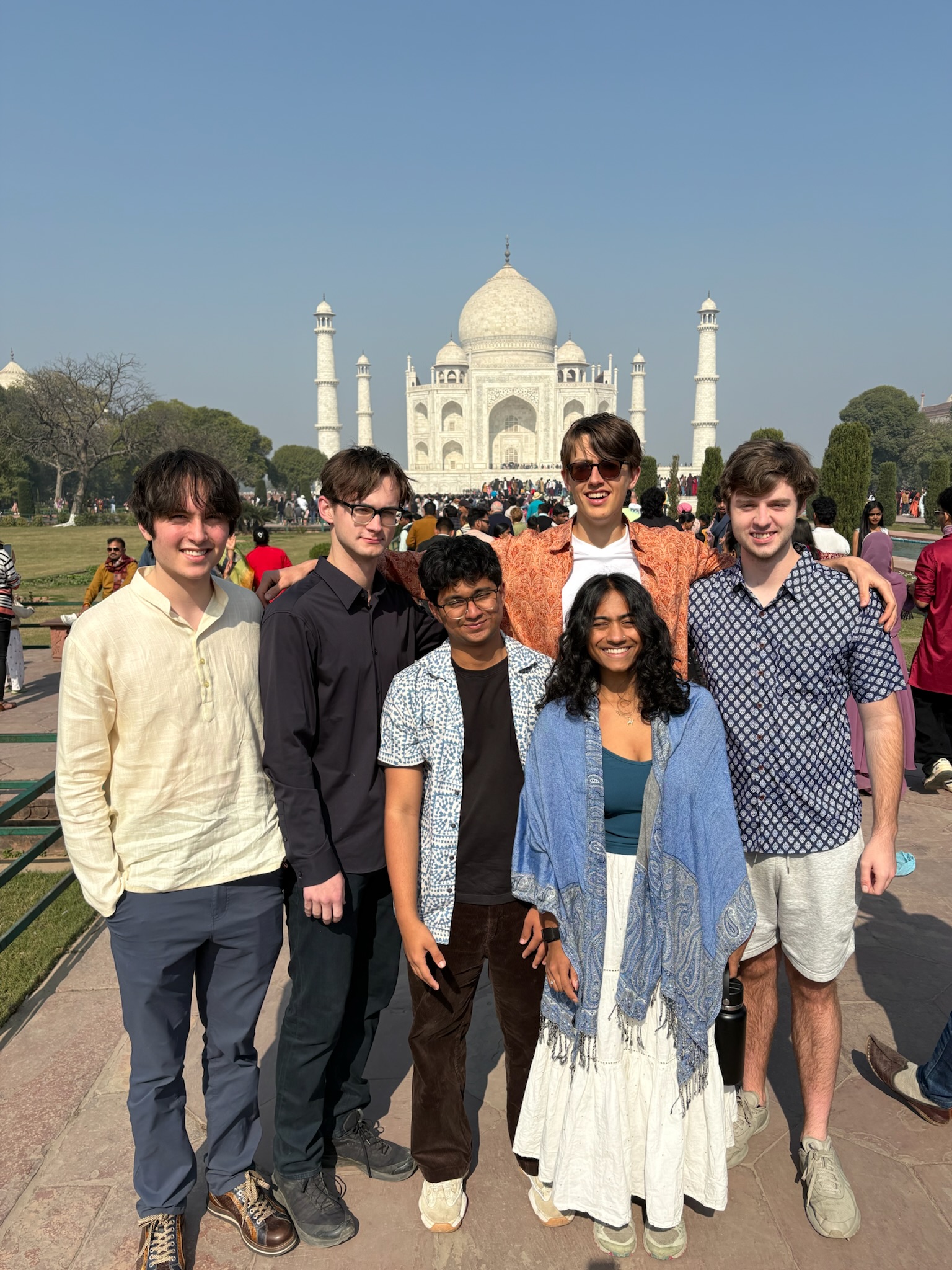
While we wanted me to start in the winter, Modal hit their intern quota, and I could only join in the Spring. I decided to do a little traveling over the winter break. First, I visited my cousins in Normandy, France for Christmas. Shortly after, I joined my Nonna (Italian Grandmother) for New Years, where she baked me lots of Lasagna and Tiramisu. After a quick stop in Rome, I flew to India with my Arcadia friends, and we toured around Delhi, Rajasthan, and the Manali hill station near the Himalayas.
Part V: Modal in NY and SF
My first week at Modal was in February, when Snowmaggedon raging through the Northeast. Unfortunately, the boiler’s foundation in my apartment building cracked due to the cold weather, and I had no hot water nor heat for a week. Just like the tropes in “My Salinger Year,” I was alone in New York, knew almost nobody, and cold. I tried boiling hot water to put at the bottom of my bed, but it fell over in the middle of the night!Fortunately, the community surrounding Modal was welcoming. A co-worker I had met kindly offered to donate his heated blanket to me, and that helped: I no longer needed the pot of water. Also, I began attending Eric Zhang’s Systems Reading Group and met a couple friends through there. I arrived just in time for the month on kernels, metal programming, and a talk from a CUDA principal engineer. In my free time, I enjoyed the following game: running through the streets of New York, following every active crossing signal, and trying to make it across before the signal expired. I got to explore a bit of my neighborhood this way!
In March, I moved out of my janky studio apartment in Chelsea and joined a sister Residency house in Chinatown called Homebrew. While Chinatown was a lot dirtier than Chelsea, I wasn’t lonely anymore and had friends who were going through the startup journey like me. During this month, I caused an incident at work where a customer’s jobs were preempted by my accidental instance deletion. Thought it was a silly mistake of mine and misuse of AI agents, it caused some discussion in the post-mortem around the best practices and access restrictions around AI agents. On the side, I extended Gotoni by enabling role-based access control for spinning up and sharing GPUs. My co-worker at Modal liked the idea, and it provided a good proof-of-concept for letting AI agents manage GPUs.
Over April, I started a basketball club within Modal. For our first game, we played at Brookyln Bridge Park. While I played lots of basketball in San Francisco, even joining an VC league for adults in the fall, I wasn’t ready for the level of intensity exhibited by these New York hoopers. Some coworkers got injured; others were emotionally prostrated. We scrapped through a couple games then ate a huge Lebanese meal soon after. This tradition continued at Modal, where we rented out an indoor court and ran games with coworkers and friends of Modal.
After grinding for the ICML submission, I looked so exhausted that my boss rightly asked what I was doing after work. I told him about my project, and maybe he thought that my performance was being impacted or it was misaligned with our team’s goals. I was soon assigned an additional project: post-training an advisor-executor agent for Lovable. While the idea didn’t work out, the project let me dip my toes in reinforcement learning.
Once I got a prototype of RDMA in gVisor support working, I experimented with on-policy distillation in Modal’s open-source training library and released a tutorial used by Modal training customers. While I loved working in New York, I missed my friends at Arcadia and wanted to dig deeper into my research interests in SF.
When I moved back into Arcadia, we continued all our traditions like reading mech interp or scaling laws papers each Sunday, but we also started playing the Avalon, a board game with social deduction. You can read my buddy Rome’s paper on the statistics of this game. Within the house, Avalon caused so much strife and frustration that we had to hide the board game on the roof! This summer was a huge improvement over the last, and I continued my load-balancing research with collaborators in Arcadia, released a tutorial for on-policy distillation across model families, and published a blog post on building RDMA support into gVisor!
This summer with Modal was also a blast. The office in SF is small but extremely locked-in, and I focused on cutting the rollout time for new container runtimes from a week to less than an hour. I also extended the developer flow for testing worker changes to multiple nodes, which was still an on-going challenge from the Neocloud incident days. Outside of work, I played lots of basketball with my co-workers, attended Modal’s Series C part(ies), and brought my friends sailing.
Contrasting College Life to Working
Now, I started school at CMU and finished my first quarter. College life has given me some necessary contrast to my working life over the past year. Outside of “auditing” classes in Berkeley, I have not been in a pure academic environment for more than a year and a half. The core math and CS curriculum have made me feel sharper, and I’ve also cut out any AI usage from my studies. I have mostly insulated myself from the tech bubble since coming here, but I do miss my conversations with my Modal and Arcadia friends. While my day has never been busier, college has also allowed me to slow down a bit and process things.When I talked to friends and co-workers about going back to school, I usually received the following reaction: “Why would you ever do that”? Conversely, many of the people I meet at CMU are surprised that I took a gap year and question the decision. Some people think that college will disappear in the next decade; others believe that the skills college teaches are even more necessary in the AI age.
Part of the reason why I wanted to start school is that work started to not feel fun anymore. Over my gap year, I experienced AI coding tools evolve from being unhelpful to being capable of one-shotting systems engineering problems. Collaboration is as important as ever now that progress is made away from a computer, and there's no better place than college to solve problems with young, brilliant minds (except a hackerhouse)...
Thank you Marmik Chaudhari and Abinaya Dinesh for reading a copy of this post.